Choosing class packaging for global shipping begins with one practical question: what must the package survive?
A carton may face vibration at sea, sudden drops at a warehouse, and humid air at a coastal port. UNCTAD’s Review of Maritime Transport reports that maritime shipping carries about 80% of global trade by volume. This makes moisture resistance, compression strength, and pallet stability essential considerations. A lightweight box can reduce freight costs. It may also collapse under stacked loads. That trade-off deserves skepticism.
Walter Soroka, author of Fundamentals of Packaging Technology, defines packaging as “the science, art, and technology of enclosing and protecting products.” His principle remains useful when selecting class packaging for different product sizes, weights, and handling risks. The right structure may include double-wall corrugated board, molded cushioning, reinforced corners, or sealed moisture barriers. Testing should reflect the actual journey, not just a controlled warehouse drop.
The World Bank’s What a Waste 2.0 estimates that global municipal solid waste could reach 3.40 billion tonnes annually by 2050. Packaging decisions therefore need both protection and material efficiency. Excessive void fill may prevent damage, but it increases volume, cost, and waste. Minimal packaging can fail too.
No universal box works everywhere. Route length, climate, stacking pressure, carrier handling, and product fragility all matter. This guide examines how to compare class packaging options using evidence, testing, and realistic shipping conditions. Some recommendations may need revision after field results. That is not failure. It is responsible packaging design.
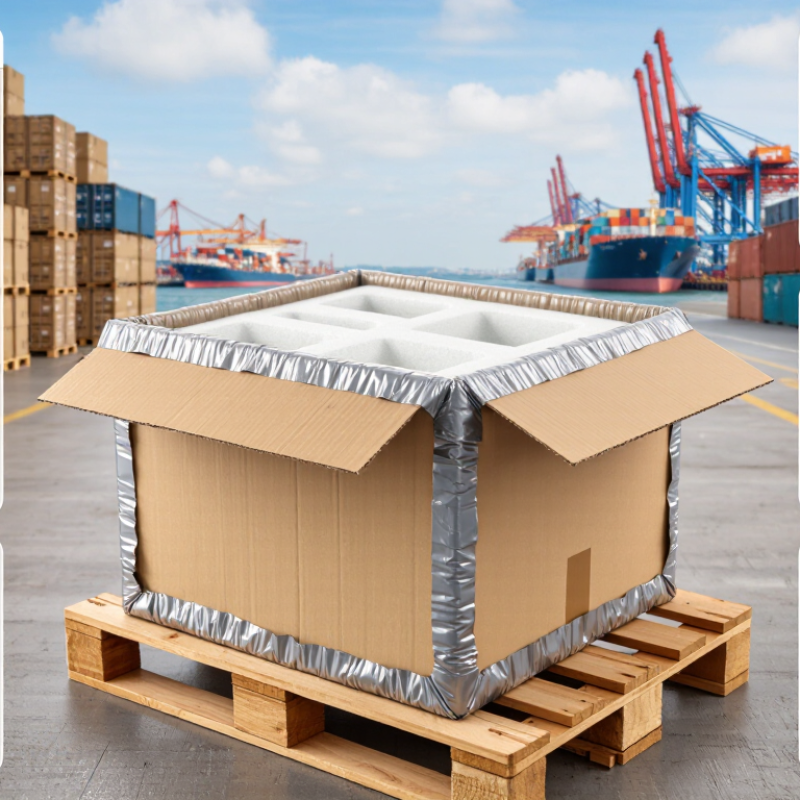
Classify each shipment by weight, fragility, hazard, and destination before selecting packaging. Weight affects carton strength, pallet design, and transport cost. A dense machine part needs edge protection and a reinforced base. Lightweight goods still need restraint because empty space allows movement. In practical warehouse tests, a simple shake check often reveals poor internal fit. Do not rely on appearance alone.
Fragile products need layered protection: cushioning, corner guards, moisture barriers, and a rigid outer carton.
The World Bank’s 2023 Logistics Performance Index assessed 139 economies and highlighted major differences in infrastructure and delivery reliability. Destination matters. A long ocean route may expose packages to humidity, vibration, and repeated handling.
UNCTAD reports that more than 80% of global merchandise trade by volume moves by sea. That statistic should influence material choices. A short domestic box may fail overseas.
I once underestimated condensation risk; the packaging looked strong, but the contents arrived damp.
Tips:
ISO 12048 testing adds a practical compression check for complete packages. Samples are conditioned before testing, then compressed under controlled conditions. This helps estimate stacking strength during storage and transport.
Compare the test load with the expected warehouse stack, transit vibration, and safety margin. In shipping trials, I have seen cartons pass compression tests but deform after damp storage. That result is not useless, but it needs reflection.
Tips: Record product weight, pallet height, humidity, and stacking time. Test both 32 ECT and 44 ECT when the cost difference is important. Check corners and lower layers carefully. Use internal cushioning when movement creates concentrated pressure. Avoid choosing by ECT alone. A clean test report can still hide a weak loading pattern. Retesting after design changes is wise, even when the carton looks unchanged.
Choosing class packaging for global shipping starts with the substance, transport mode, and applicable regulations. For regulated dangerous goods, UN 4G and 4GV packaging can provide a tested outer box for approved shipping configurations. A 4G box is tested with specific inner packagings, while 4GV packaging offers more flexibility for compatible inner containers.
That flexibility is not unlimited.
Check the UN specification mark before packing. It should match the required packaging group, gross mass, and performance level. Confirm that the packaging instruction permits the chosen 4G or 4GV configuration.
Then inspect the box for crushed corners, moisture, or damaged seams. Small defects matter. Place sealed inner containers upright, prevent movement with suitable cushioning, and keep absorbent material where the instruction requires it.
A loose bottle can become a serious problem after vibration, stacking, and temperature changes.
Use a documented packing procedure. Record the inner packaging type, closure method, net quantity, and final gross weight. Take a clear photo of the completed closure when practical.
Verify labels, marks, shipping documents, and emergency contact details against current rules for every transport mode. Requirements may differ between air, sea, road, and rail shipments.
Do not assume a 4GV box accepts every container or substance. That assumption is easy, and wrong.
When the configuration is unusual, ask a qualified dangerous-goods professional or the packaging test facility to review it before dispatch. We also recommend a trial pack under realistic conditions, although teams sometimes skip this step when deadlines tighten.
How to Choose Class Packaging for Global Shipping?
Moisture control should begin with the exposure profile, not a convenient packaging habit. ASTM D4332 defines controlled conditioning for transport packages, but it does not assign a universal packaging class. At 23°C and 50% RH, packages face a common laboratory baseline. This profile suits many temperate warehouse and inland-shipping studies. ISO 2233 provides comparable conditioning guidance for filled transport packages. Document the tolerance, exposure duration, and package orientation.
The 38°C/90% RH profile is much more demanding. Using saturation-vapor-pressure calculations referenced by WMO-No. 8, its vapor pressure is about 4.2 times higher than 23°C/50% RH. That difference can drive moisture into corrugated board, paper labels, wood components, and poorly sealed inner packs. UNCTAD’s Review of Maritime Transport 2024 reports that over 80% of global merchandise trade by volume moves by sea. A container may cross several climate zones before delivery. Short tests can miss that reality.
For humid routes, specify 38°C/90% RH when risk justifies it, then verify performance through compression and vibration testing. Use moisture-barrier liners, sealed seams, and correctly sized desiccant capacity. Do not rely on desiccant alone. It cannot repair a leaking closure. A practical weakness remains: 38°C/90% RH may overstate some routes and understate condensation during cold transfers. I would record both profiles when uncertainty matters, including product moisture limits and inspection results after conditioning. Temperature cycling deserves attention too. One steady chamber exposure is not a complete shipping story.
ASTM D4332 conditioning comparison: the standard laboratory atmosphere is 23 ± 2°C and 50 ± 5% RH, while the more severe tropical atmosphere is 38 ± 2°C and 90 ± 5% RH. The higher-temperature, high-humidity condition creates greater moisture stress for packaging intended for global shipping.
Reference: ASTM D4332, Standard Practice for Conditioning Containers, Packages, or Packaging Components for Testing.
Global shipping needs packaging that survives handling and controls billed volume. The Pitney Bowes Parcel Shipping Index reported 161 billion parcels worldwide in 2023. That scale makes small packaging errors expensive. A carton with five unused centimeters can increase dimensional-weight charges across thousands of shipments.
Validate the pack through ISTA 3A testing before approving a global shipping design. The protocol examines drops, vibration, compression, and atmospheric conditions for parcel systems. Test a realistic product, not only an empty box. Record corner damage, seal separation, product movement, and internal cushioning compression. A package may pass one laboratory sequence yet fail after humidity exposure. That uncomfortable gap deserves investigation. It is easy to overprotect the product, too. Extra foam may reduce damage while raising dimensional weight and material consumption.
Tips: Measure the packed carton, including bulging panels. Compare actual weight with dimensional weight using each destination’s current divisor. Keep at least three samples for repeat testing. Photograph every failure. Ask the testing laboratory to document conditioning, drop heights, and acceptance criteria. The International Safe Transit Association recommends using representative shipping units, because weak seams and loose contents often appear only in realistic configurations. Review packaging data quarterly. Freight rules, carton suppliers, and product assortments change. A design that was economical last year may quietly become costly today. I would also challenge any “universal” box claim; regional humidity, handling networks, and pallet practices can invalidate convenient assumptions.
| Packaging Configuration | External Dimensions (L × W × H) |
Package Volume | Product Weight | Packaging Weight | Gross Weight | Dimensional Weight (Divisor 139) |
Chargeable Weight | Space Efficiency | ISTA 3A Validation Focus | Decision |
|---|---|---|---|---|---|---|---|---|---|---|
| A. Compact single-wall carton | 12 × 9 × 6 in 30.5 × 22.9 × 15.2 cm |
648 in³ 10.6 L |
3.2 lb 1.45 kg |
0.5 lb 0.23 kg |
3.7 lb 1.68 kg |
4.7 lb 2.13 kg |
4.7 lb 2.13 kg |
74% | Drop performance at filled corners, edge and face impacts; vibration exposure; closure and product movement inspection. | Good for compact items |
| B. Oversized single-wall carton | 16 × 12 × 8 in 40.6 × 30.5 × 20.3 cm |
1,536 in³ 25.2 L |
6.1 lb 2.77 kg |
0.9 lb 0.41 kg |
7.0 lb 3.18 kg |
11.0 lb 4.99 kg |
11.0 lb 4.99 kg |
58% | Higher risk of internal movement, panel deformation and vibration damage because of excess void space. | Review dimensions |
| C. Large protective carton | 20 × 16 × 12 in 50.8 × 40.6 × 30.5 cm |
3,840 in³ 62.9 L |
11.8 lb 5.35 kg |
1.8 lb 0.82 kg |
13.6 lb 6.17 kg |
27.6 lb 12.52 kg |
27.6 lb 12.52 kg |
46% | Compression and vibration become more significant; verify cushioning recovery, corner protection and pallet or parcel handling stability. | High DIM-weight exposure |
| D. Right-sized double-wall carton | 13 × 10 × 7 in 33.0 × 25.4 × 17.8 cm |
910 in³ 14.9 L |
5.4 lb 2.45 kg |
0.8 lb 0.36 kg |
6.2 lb 2.81 kg |
6.5 lb 2.95 kg |
6.5 lb 2.95 kg |
79% | Validate drop resistance, compression strength, vibration durability and closure integrity after conditioning. | Recommended balance |
| E. Modular two-pack shipper | 18 × 12 × 9 in 45.7 × 30.5 × 22.9 cm |
1,944 in³ 31.9 L |
10.8 lb 4.90 kg |
1.4 lb 0.64 kg |
12.2 lb 5.53 kg |
14.0 lb 6.35 kg |
14.0 lb 6.35 kg |
71% | Assess partition strength, product-to-product contact, center-of-gravity stability and repeated vibration effects. | Efficient for two units |