Why is Retail Display Packaging Essential for Brand Success?
Retail display packaging plays a crucial role in brand success. Studies show that consumers are 72% more likely to purchase a product with eye-catching packaging. This emphasizes the need for businesses to invest in impactful retail display packaging. It serves not only as protection for the product but also as a vital marketing tool.
One report from the Packaging Machinery Manufacturers Institute asserts that well-designed display packaging boosts sales by up to 30%. Additionally, 65% of consumers form their first impression of a product based on its packaging alone. This highlights the need for brands to carefully consider how their products are presented in stores. Despite this knowledge, many brands still overlook the significance of packaging.
However, some companies face challenges in aligning display packaging with brand identity. It is essential to ensure that packaging reflects genuine brand values and appeals to target audiences. A disconnect can lead to lost sales opportunities. Retail display packaging should not only stand out but also resonate emotionally with consumers, making it a complex yet necessary part of brand strategy.
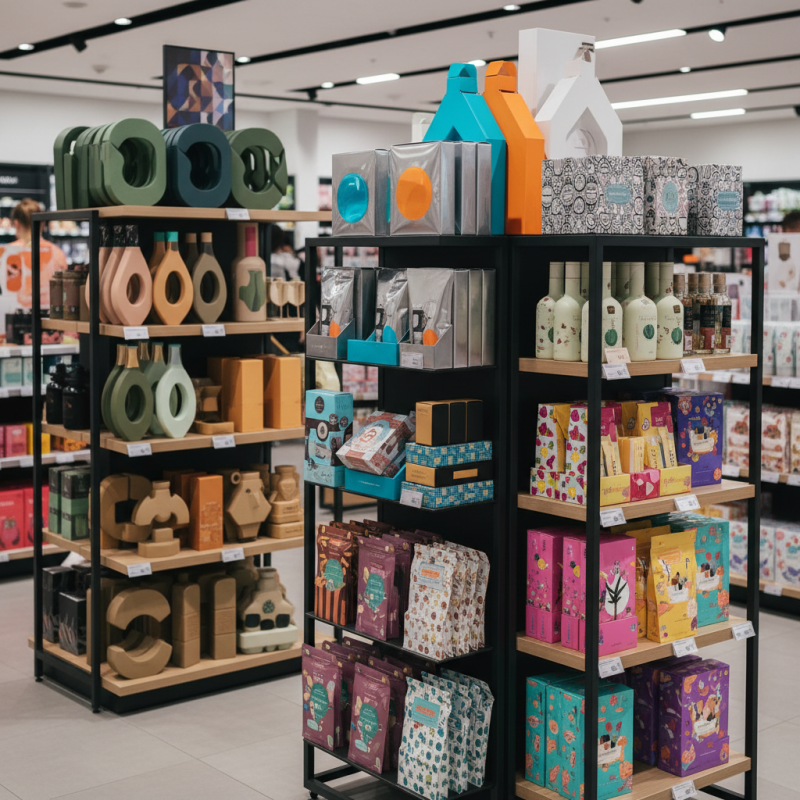
The Importance of Retail Display Packaging in Brand Visibility
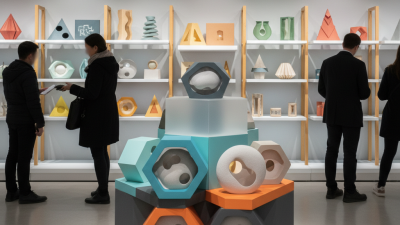
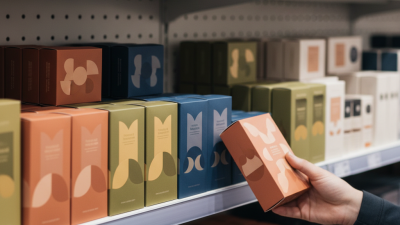
Retail display packaging is vital for enhancing brand visibility. Eye-catching designs attract attention in crowded shelves. Unique shapes and colors can make a product stand out. When shoppers notice attractive displays, they are more likely to consider the product. Engaging graphics and clear messaging can communicate brand identity effectively.
Creating an impactful retail display is not easy. It requires a deep understanding of the target audience. Packaging must resonate with consumers’ preferences and values. Sometimes, what works on paper may not translate well in stores. Brands must experiment and iterate for improvement. Collecting feedback and observing consumer interactions can offer valuable insights.
Effective retail display packaging also tells a story. It connects with consumers emotionally. When a package evokes a feeling, it boosts memorability. Yet, relying solely on aesthetics can be risky. Practicality should not be overlooked. The package must protect the product and be easy to handle. Balancing these elements is key to success in the competitive retail landscape.
Importance of Retail Display Packaging in Brand Visibility
How Retail Display Packaging Enhances Customer Engagement
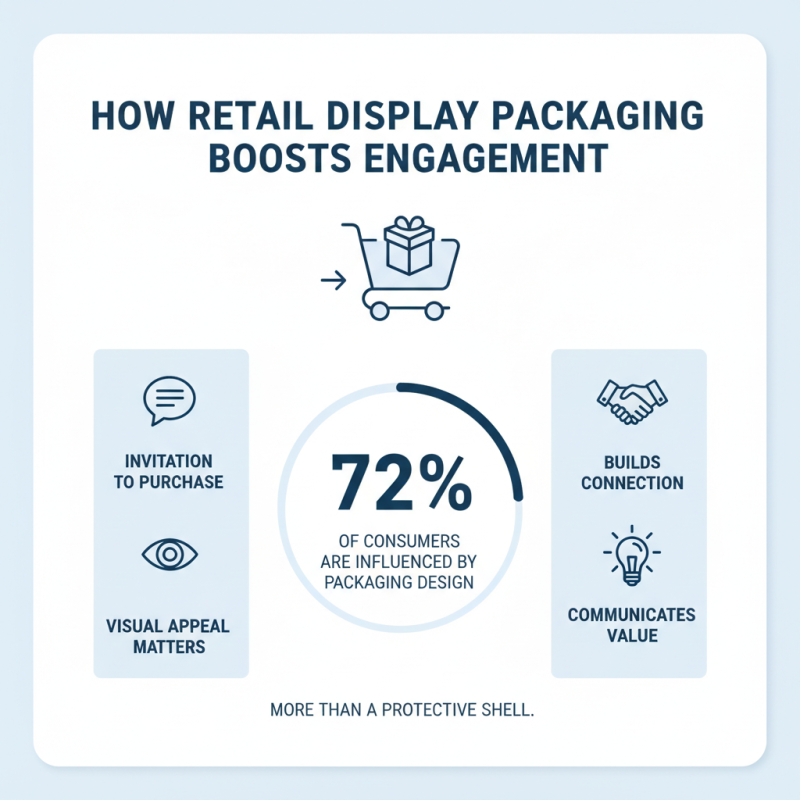
Retail display packaging is a vital touchpoint in engaging customers. Research shows that 72% of consumers say packaging design influences their purchase decisions. This high statistic illustrates that packaging isn't just a protective shell; it's an invitation that speaks to the consumer.
Effective retail display packaging tells a brand’s story. It turns products into experiences, tapping into emotions and memories. For example, bright colors and unique shapes can attract attention. Engaging visuals increase foot traffic, even in crowded retail spaces. In fact, products in eye-catching displays see an increase in sales by up to 40%, according to industry reports. However, not all designs resonate. Brands must reflect on whether their packaging aligns with their target audience.
Another aspect is accessibility. Poorly designed packaging can frustrate customers, leading to abandonment. Nearly 30% of consumers have left a product on the shelf due to unappealing packaging. Simple design flaws can create a disconnect. Thus, it’s essential for brands to continually assess and adapt their packaging strategies. Engaging customers isn't a one-time effort; it requires ongoing analysis and refinement.
The Role of Packaging Design in Communicating Brand Values
In today's competitive landscape, packaging design plays a pivotal role in conveying
brand values. Effective retail display packaging
can influence consumer perception significantly. According to a report by the
Paper and Packaging Board,
72% of consumers believe that packaging design influences their purchasing decisions.
This statistic emphasizes the need for brands to prioritize how they present themselves
through their packaging.
Packaging must tell a story. It should reflect the brand's mission and values while also
appealing to the target audience. A survey from the
Institute for Business Creativity
highlighted that 60% of consumers are more likely to buy a product if its packaging
is aesthetically pleasing. However, aiming for perfection can backfire. Some designs may
become overly complicated or lose clarity. Striking a balance between creativity and
functionality is vital.
Investments in packaging must be data-driven.
The 2021 Global Retail Packaging Market Report
notes that brands focusing on sustainable materials see a 25% increase in
customer loyalty. Yet, some brands overlook this trend, leading to missed opportunities.
Brands must continually reassess their packaging strategies to remain relevant. A thoughtful
approach to design can effectively communicate brand values and foster deep connections
with consumers.
Retail Display Packaging Trends Influencing Consumer Behavior
Retail display packaging plays a significant role in shaping consumer behavior. It captures attention and can significantly influence purchase decisions. Engaging packaging design not only attracts shoppers but also communicates brand values and messages. Today’s consumers seek experiences alongside products. Packaging serves as a vital touchpoint for brands looking to connect with their audience.
Tip: Use bold colors and imaginative designs to stand out on the shelf.
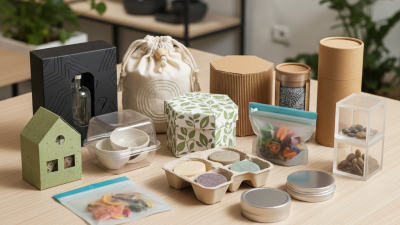
Trends indicate that sustainability is becoming increasingly important. Eco-friendly packaging resonates with environmentally conscious consumers. Brands embracing this trend can improve their reputation and attract loyal customers. However, implementing sustainable practices can be challenging. Companies must balance quality, function, and eco-friendliness.
Tip: Regularly assess packaging materials to enhance sustainability without compromising design.
Another growing trend is interactive packaging. This innovative approach invites consumers to engage emotionally with the product. Augmented reality and QR codes are examples of such interaction. While this technique can foster a deeper connection with the audience, not all brands may know how to execute it effectively. Experimentation is crucial for finding the right balance.
Tip: Test different interactive features and gather consumer feedback for improvement.
Measuring the Impact of Display Packaging on Sales Performance
Retail display packaging plays a crucial role in influencing sales performance. The visual appeal of packaging can attract customers, drawing their attention to products on crowded shelves. Well-designed packaging can create an immediate emotional connection. This emotional response often translates into purchasing decisions. When shoppers admire a product's display, they are more likely to engage with it.
Measuring the impact of display packaging requires data analysis and careful observation. Retailers often monitor sales numbers before and after implementing new packaging designs. Such comparisons can highlight the effectiveness of a display strategy. Additionally, consumer feedback can provide insights into their preferences and perceptions. Yet, relying solely on data may lack nuance. Sometimes, the emotional appeal that packaging evokes is hard to quantify.
Retailers must balance aesthetics with functionality. Packaging should not only look good but also protect the product. Poor packaging can lead to damaged goods, impacting sales negatively. Brands must continuously reassess their display strategies to align with customer expectations. Evaluating past successes and failures in packaging can guide innovation. The evolution of packaging remains vital for staying competitive in the retail landscape.