2026 Top Trends in Digital Packaging for Sustainable Solutions?
The future of packaging is evolving rapidly, driven by the demand for sustainability. Digital packaging has emerged as a key player in this transformation. This innovative approach not only enhances branding but also reduces waste and promotes environmental responsibility.
In 2026, we will witness top trends in digital packaging that prioritize eco-friendly materials and processes. These trends reflect a shift towards more transparent supply chains and smarter technologies. Enhanced digital printing techniques allow brands to customize packaging while minimizing their carbon footprint.
However, challenges remain. Not all digital packaging solutions are universally adopted. Companies must confront issues like cost and the need for recycling infrastructure. The journey towards sustainability is ongoing and requires collective efforts. As the industry adapts, the role of digital packaging becomes even more crucial in ensuring a balanced approach to consumer needs and environmental impact.

Emergence of Biodegradable Materials in Digital Packaging
The rise of biodegradable materials in digital packaging is revolutionizing the industry. More companies are coalescing around environmentally friendly solutions. A recent report from Smithers predicts that the global market for biodegradable packaging will reach $700 billion by 2026. This indicates a growing shift towards sustainable practices.
Biodegradable materials offer several advantages. They reduce waste and the carbon footprint associated with traditional packaging. For instance, plant-based plastics are gaining popularity. These materials can decompose naturally, unlike petroleum-based plastics. However, challenges remain. Not all biodegradable options break down effectively in various environments.
The industry must address issues related to consumer awareness and the need for recycling infrastructure. Some consumers still equate biodegradable with compostable, which isn’t always true. It's essential to educate the market about what biodegradable really means. Striking a balance between sustainable innovation and consumer understanding will be key as we move forward.
2026 Top Trends in Digital Packaging for Sustainable Solutions
This chart illustrates the projected growth of various biodegradable materials used in digital packaging solutions from 2023 to 2026. It highlights the increasing adoption of eco-friendly options in the packaging industry.
Advancements in Smart Packaging Technologies for Sustainability
In recent years, smart packaging technologies have evolved significantly, fostering sustainable solutions in the packaging industry. These advancements focus on reducing waste and enhancing product lifecycle management. Many companies are now leveraging innovative materials that not only protect products but are also biodegradable. This shift is essential for addressing environmental concerns.
Consider smart labels equipped with QR codes. They can provide consumers with information on proper disposal methods and recycling. This transparency builds consumer trust and encourages responsible behavior. Such features bridge the gap between functionality and sustainability but can sometimes overwhelm the user. Instructions need to be clear and user-friendly.
However, integrating smart technologies often poses challenges. The cost of implementing advanced solutions can deter smaller businesses. Additionally, the reliance on digital systems raises concerns about accessibility for all consumers. It’s crucial that solutions do not exclude anyone. A balance between high-tech features and user experience remains a priority.
Consumer Trends Driving Eco-Friendly Packaging Solutions
As consumers become more environmentally aware, their packaging preferences are shifting. A recent report from Smithers states that 61% of shoppers prioritize sustainability when choosing products. This dramatic change drives brands to innovate in digital packaging solutions. With advancements in technology, companies are now using recyclable materials and biodegradable options. This presents new avenues for reducing waste.
The e-commerce sector is also responding to these trends. According to a study by Packaging Strategies, over 70% of consumers prefer brands that use eco-friendly packaging. Brands are exploring greener alternatives to traditional plastic. Innovations such as plant-based inks and compostable films are gaining ground. Yet, the challenge remains: balancing functionality with sustainability. While eco-friendly materials often have limitations, brands must refine their designs to ensure product protection.
Moreover, supply chains are evolving. More companies are adopting transparent practices regarding their packaging materials. This transparency builds trust with consumers. Yet, sustainability cannot be achieved overnight. Ongoing research and development are crucial. Packaging decisions must consider long-term impacts. Balancing consumer demand with environmental responsibility is a complex task that requires continuous reflection and action.
2026 Top Trends in Digital Packaging for Sustainable Solutions
| Trend |
Description |
Impact on Sustainability |
Consumer Engagement |
| Biodegradable Materials |
Packaging made from natural materials that decompose after use. |
Reduces landfill waste and environmental pollution. |
Increases affinity with eco-conscious consumers. |
| Digital Printing Technology |
Allows for customizable and short-run packaging solutions. |
Minimizes waste through on-demand printing. |
Enhances brand storytelling and personalization. |
| Reusable Packaging |
Designing packaging that can be returned and reused multiple times. |
Helps to reduce single-use plastic consumption. |
Encourages customer loyalty and repeated engagement. |
| Smart Packaging |
Includes QR codes and sensors to provide information about products. |
Promotes transparency and traceability in the supply chain. |
Fosters consumer trust and awareness about sustainability practices. |
| Minimalist Design |
Focus on reducing packaging materials while maintaining functionality. |
Lowers resource consumption and waste generation. |
Appeals to simplicity-seeking consumers. |
The Role of Digital Printing in Reducing Packaging Waste
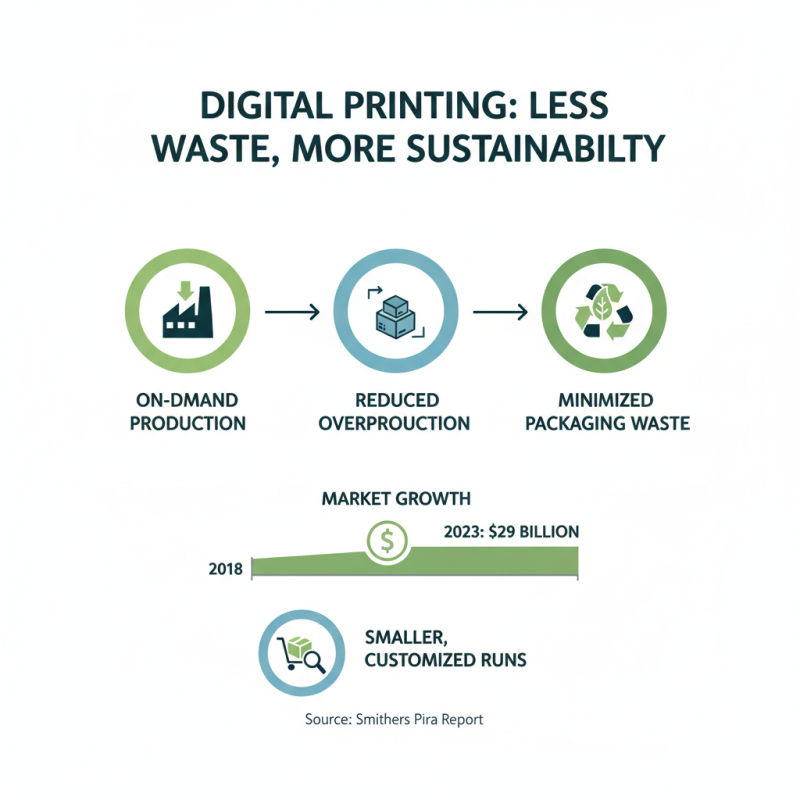
The role of digital printing in packaging has transformed the industry, especially regarding sustainability. Digital printing technology allows for on-demand production, reducing overproduction and waste. According to a recent report from Smithers Pira, digital printing is projected to grow significantly, reaching a market value of $29 billion by 2023. This shift means businesses can produce smaller runs tailored to specific consumer needs, minimizing excess stock.
Packaging waste poses a significant challenge. In 2018, the World Economic Forum reported that roughly 320 million tons of plastic waste were generated globally. Digital printing helps alleviate this issue by facilitating more efficient use of materials. Brands can print directly on biodegradable materials, ensuring products are both appealing and eco-friendly. However, the industry must address challenges such as printer calibration and color consistency to maintain quality.
**Tip:** Focus on using recyclable materials alongside digital printing for an even greater impact.
**Tip:** Invest in training for staff on digital printing technology to optimize processes and reduce errors.
**Tip:** Consider implementing a closed-loop system to track and manage packaging waste effectively.
Regulatory Influences and Their Impact on Sustainable Packaging Trends
Regulatory influences are reshaping the landscape of sustainable packaging.
Governments worldwide are implementing stricter regulations to combat plastic pollution. These regulations push companies to rethink their packaging materials and processes. Many brands are transitioning to biodegradable or recyclable options due to these mandates.
There is a notable shift towards transparency. Brands must disclose their sustainability practices and material sources. This requirement builds trust but also presents challenges. Not all companies have the same level of resource for compliance. Smaller companies might struggle to adapt quickly. Sometimes, pushing for regulation creates a gap between industries.
Today, packaging that meets regulatory standards is not enough. Brands must also focus on innovation. This includes using smart technology to enhance user experience while remaining sustainable. Yet, many companies face hurdles in this journey. Balancing cost with compliance can be tricky. As regulations evolve, the pressure mounts for sustainable packaging solutions.