Why Is Shelf Ready Packaging Important for Global Buyers?
For global buyers, shelf ready packaging is more than a retail convenience. It connects factory efficiency, transport protection, store labor, and shopper visibility. A carton that opens cleanly can move from a pallet to a shelf within minutes. A weak design may leave torn board, loose products, or confusing instructions behind.
ECR Europe’s retail-ready packaging guidance reports replenishment-time reductions of up to 50% in documented retail trials. The result depends on product shape, store routines, and staff training. It is not a universal promise. Still, the operational logic is clear. Buyers can compare case dimensions, opening methods, stacking strength, and disposal requirements before approving a global supplier. These details matter when products cross several warehouses and arrive in different retail formats.
Neil Farmer, a packaging and supply-chain consultant, has described the role simply: “Shelf-ready packaging is about getting products from the back of the store to the shelf quickly and efficiently.” That sentence remains useful, although speed alone is not enough. The OECD’s Global Plastics Outlook found that global plastic waste reached 353 million tonnes in 2019, more than double the 2000 level. This pressure makes material choices increasingly important. Buyers now examine recycled content, fiber recovery, ink coverage, and unnecessary components alongside cost. UNEP also reports that around 430 million tonnes of plastic are produced each year, much of it for short-lived uses. A practical design must therefore protect products without creating excessive waste. The best solution is rarely perfect. It is measurable, adaptable, and honest about its trade-offs.

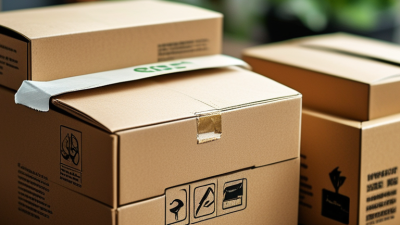
Shelf ready packaging (SRP) is a transport pack designed to reach the shelf with minimal handling. Instead of opening cartons and arranging each item, store staff remove a perforated panel. The remaining tray becomes the display. This sounds simple. It is not always simple. The pack must protect products, stack safely, and look presentable after shipping. For global buyers, the working definition matters: SRP combines logistics packaging with retail display functions.
Its process begins with product and shelf measurements. Engineers check carton strength, opening force, label visibility, and pallet stability. A typical pack uses tear lines, tabs, or a removable cover. Workers can open it without knives, reducing product damage and handling time. Once opened, the tray moves directly onto the shelf. Store teams then face fewer loose units and less cardboard waste.
From my packaging reviews, small details often decide success. A tear line placed two millimeters too high can expose products unevenly. Humidity can also soften board during ocean transport. That problem is easy to miss.
Reliable development requires testing beyond a clean factory sample. Buyers should request compression, vibration, drop, and humidity tests. They should also inspect a full pallet, not one carton. Retail trials can reveal awkward openings or unstable trays. Data should include damage rates, replenishment time, and shelf appearance. Cost deserves attention too. A lighter pack may reduce freight, yet fail under stacking pressure. The best design balances protection, labor, presentation, and regional handling conditions. It may need revision.

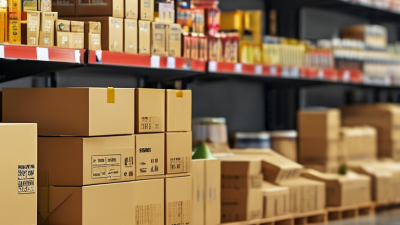
Shelf ready packaging improves retail handling by reducing unpacking, cutting, and waste at store level. A worker can move one case from the delivery pallet directly to the shelf. The carton opens cleanly, and the product remains visible. Small details matter here: tear lines, stable trays, readable labels, and accurate case dimensions. ECR Retail Loss Group research places grocery on-shelf availability near 96–98%. That narrow gap still represents substantial lost sales across international networks.
Display quality also affects shopping speed. Products facing forward, with clear price areas, are easier to find during busy store hours. FMI’s 2024 food retail report identifies labor productivity as a continuing investment priority. Shelf ready packaging supports that priority by reducing manual touches and replenishment time. Yet packaging should not be designed only for speed. A tray that collapses under humidity can damage displays before opening. That failure is easy to overlook.
Global buyers should test cartons through transport, stacking, opening, and shelf trials. GS1 guidance on packaging data also highlights the importance of consistent product and case information. A barcode placed near a tear line may scan poorly after opening. Retailers should measure opening time, shelf capacity, damage rates, and customer visibility. The cheapest format may not be the most efficient. Sometimes, a slightly stronger board performs better. Packaging decisions still need reflection.
Why Is Shelf Ready Packaging Important for Global Buyers?
Global buyers prioritize shelf ready packaging because efficiency begins before products reach the store. A carton that opens cleanly can reduce shelf replenishment time and handling costs. In warehouse trials, workers notice small details quickly. Easy tear strips matter. Stable stacking matters more.
Packaging dimensions must match pallets, trucks, shelves, and storage equipment. A few extra centimeters can create unused space or damaged corners. Clear product information also supports faster checks at receiving points. However, efficiency should not override protection. A lightweight carton that collapses is not an improvement.
Compliance creates another practical demand. Buyers may request material specifications, recycling information, safety data, and packaging test records. Requirements differ across countries and can change over time. Reliable suppliers keep documents current and traceable. They also verify inks, coatings, adhesives, and recycled content through suitable testing. Claims should be measurable, not decorative.
Sustainability is now connected to cost and reputation. Using less material can reduce transport emissions and disposal volume. Yet thinner packaging may increase product damage. That weakens the environmental benefit. Recycled fiber can also vary in strength, especially in humid storage areas. This part deserves honest review. Sometimes the greener option needs better design, not simply less material.
Global buyers therefore examine packaging performance across the full supply chain. They compare opening time, pallet efficiency, protection, documentation, and end-of-life options. Shelf ready packaging succeeds when these details work together under real operating conditions.
| Buyer Priority | Measurable Dimension | Relevant Data or Requirement | Why It Matters to Global Buyers | Buyer Evaluation Method |
|---|---|---|---|---|
| Store Efficiency | Shelf replenishment time | Shelf-ready packaging is designed to be opened, placed, and displayed with minimal handling. A practical internal benchmark is to measure the complete shelf-opening and placement process in seconds per case. | Fewer handling steps can reduce labor requirements and help stores replenish products more consistently. | Conduct timed trials using the same case size, product quantity, shelf configuration, and operator instructions. |
| Transport Efficiency | Pallet and container cube utilization | Measure occupied volume against the usable pallet or container volume. The result should be reported as a percentage and compared with the buyer's approved pallet pattern and maximum height. | Improved dimensional efficiency can reduce empty space, shipment frequency, and transport emissions per selling unit. | Review case dimensions, pallet layout, load stability, maximum stacking height, and actual shipment configuration. |
| Product Protection | Compression and distribution performance | Packaging performance can be verified through recognized distribution tests, including vibration, shock, compression, and environmental conditioning. ASTM D4169 and ISO 4180 are commonly used test references. | A shelf-ready format must remain stable during international transport, warehouse handling, and store placement. | Request laboratory test reports based on the expected distribution cycle, stacking load, humidity, and transport mode. |
| Regulatory Compliance | Packaging legislation readiness | The European Union Packaging and Packaging Waste Regulation entered into force on 11 February 2025 and is generally scheduled to apply from 12 August 2026, subject to its specific provisions. | Buyers increasingly require packaging designs and documentation that can support current and future market-access obligations. | Check material composition, recyclability evidence, labeling, packaging weight, and applicable national implementation requirements. |
| Recyclability | Material simplicity and separability | ISO 18604 defines packaging recycling as material recycling and is part of the ISO 18601 packaging-and-environment series. Mono-material structures and easily separable components generally simplify recycling assessment. | Simpler packaging construction can improve sorting compatibility and reduce the risk of non-recyclable components. | Document each material, adhesive, coating, ink, label, closure, and component; verify compatibility with the target market's recycling system. |
| Traceability | Barcode readability and data accuracy | Retail packaging commonly uses standardized identification and barcode systems. Barcode quality should be verified under the relevant application, print process, substrate, and scanning distance. | Reliable scanning supports receiving, inventory control, replenishment, checkout, and product traceability across borders. | Use barcode verification equipment and confirm quiet zones, contrast, magnification, placement, and master-data accuracy. |
| Sustainability Reporting | Packaging weight and material intensity | Report packaging material by component and weight, such as primary, secondary, and tertiary packaging. Keep recycled-content claims, recyclability claims, and disposal instructions supported by appropriate evidence. | Consistent data enables buyers to compare suppliers, calculate packaging impacts, and meet internal sustainability reporting requirements. | Request a packaging bill of materials, component weights, material specifications, certificates, and a documented calculation method. |
| Commercial Scalability | Standardization across markets | Use common case dimensions, modular display formats, multilingual artwork zones, and adaptable labeling areas where product and regulatory requirements allow. | A scalable design can reduce tooling changes, simplify procurement, and support multiple markets without compromising local compliance. | Compare tooling requirements, minimum order quantities, lead times, artwork revisions, and changeover costs across target markets. |
Reference framework: European Union Packaging and Packaging Waste Regulation (Regulation (EU) 2025/40); ISO 18601–18604 packaging and environment standards; ISO 4180 distribution packaging testing; ASTM D4169 distribution-cycle testing. Operational benchmarks should be validated against each buyer's specific supply chain, store format, and target-market regulations.
Shelf-ready packaging matters internationally because retail handling varies by country and store format. Its design must survive transport, storage, opening, and shelf replenishment. UNCTAD’s Review of Maritime Transport reports that more than 80% of world trade by volume moves by sea. That distance exposes cartons to compression, humidity, vibration, and repeated handling. Strong corners and moisture-tolerant board are practical safeguards. Yet stronger material can increase weight and emissions. That trade-off needs testing.
International suitability also depends on information design. The OECD’s Global Plastics Outlook reports that packaging accounts for about 40% of global plastic waste. Right-sized packs, recyclable structures, and fewer mixed materials can reduce waste. However, “recyclable” is not universal. Local collection systems differ sharply. Use multilingual instructions, measured claims, and clear disposal guidance. Pictograms based on ISO 780 can support handling without relying only on translation. A carton should open cleanly. Perforated tear lines, stable bases, and visible barcodes help store workers replenish shelves quickly. GS1’s Sunrise 2027 guidance supports the transition toward 2D barcodes at retail points. Leave adequate quiet space around symbols and codes.
Designers should validate dimensions against common pallets and shelf depths. A display box that fits one market may block another shelf. Humidity, drop, and compression tests reveal hidden failures. The weakest panel often fails first. Pilot shipments across climates provide stronger evidence than a desk review. Still, no laboratory test perfectly recreates every port, warehouse, or store. That limitation should remain visible in specifications.
Shelf-ready packaging matters because global buyers need products to move from pallets to store shelves quickly. Good packaging can reduce unpacking labor, protect goods during long transport, and improve shelf presentation. Yet appearance alone is not enough. A solution may look efficient but fail during humid storage, repeated handling, or automated distribution.
Buyers should evaluate suppliers through clear evidence. Request material specifications, compression-test results, drop-test records, and samples from the intended production line. Check whether the design fits standard pallets, warehouse equipment, and retail shelving. Ask about print consistency, recycled content, production capacity, and lead times. Supplier audits can reveal practical details, such as weak quality controls or unclear change-management procedures. References from comparable markets also help, but they should not replace independent testing. No scorecard is perfect. Packaging decisions still involve judgment.
Tips: Compare at least three samples under realistic conditions. Open each case with normal store tools. Measure setup time, product visibility, waste, and shelf stability. Test damp cartons and uneven pallets too. Ask suppliers to explain failure points, not only strengths. A pilot shipment can expose hidden costs, although one trial may not represent every climate or route. Record results with photos and simple measurements. Small details matter.
Buyer evaluation priorities are shown as a transparent benchmark scorecard. Packaging that supports fast shelf replenishment, product protection, sustainability, and international logistics can reduce handling complexity and improve retail readiness.
Benchmark scale: 1 = low priority, 5 = critical priority. Scores are a neutral industry evaluation framework and do not represent any company or brand.