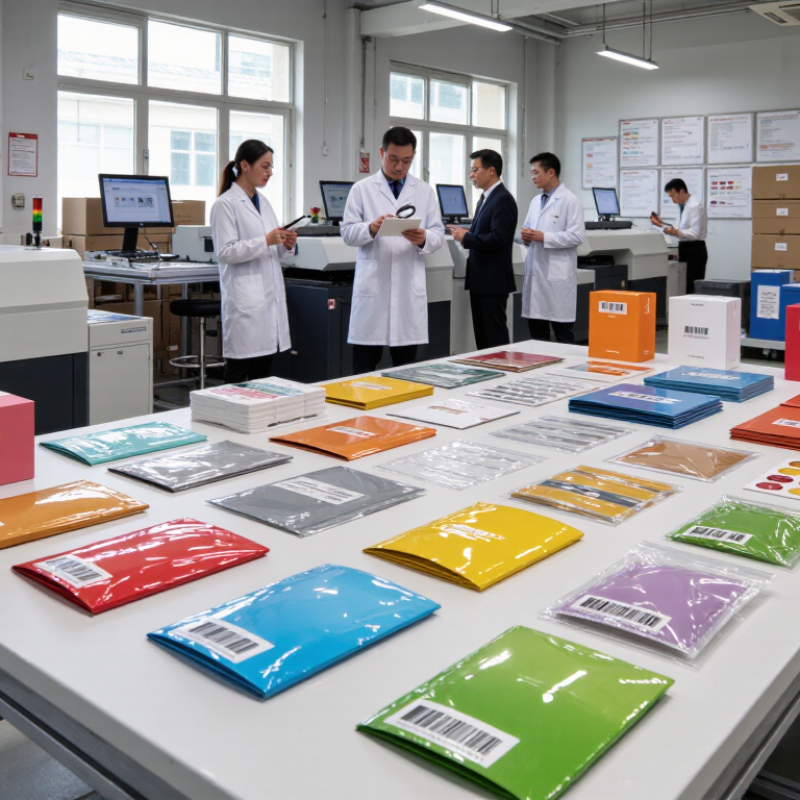
Choosing among China’s best digital packaging suppliers requires more than comparing prices on a marketplace. Global buyers need reliable print quality, responsive communication, and clear production evidence. This guide explores how experienced suppliers support international brands with digital packaging for cartons, labels, pouches, sleeves, and short-run promotional projects.
A dependable supplier should provide physical samples before mass production. Ask to inspect color consistency, surface finish, adhesive strength, and barcode readability. A well-prepared factory can explain its prepress workflow, proofing process, material options, and inspection standards. Photos are helpful, but they are not enough. A video call, sample review, or independent factory audit adds stronger evidence. Certifications may support credibility, yet they should match the actual product and destination market.
Practical details often reveal the real capability. Check minimum order quantities, sampling fees, production lead times, packaging protection, and shipping documents. Request a written quotation with clear specifications and agreed tolerances. Drop-test results can matter when cartons travel through several warehouses. Food-contact or sustainability claims also require careful verification, not casual promises. No supplier is perfect. Even an established factory may experience color variation or delayed material arrivals. The responsible approach is to identify these risks early and document corrective actions. This introduction helps global buyers evaluate China-based partners with greater confidence, while remembering that a low price should never replace traceability, consistent quality, and professional after-sales support.
China Best Digital Packaging Suppliers for Global Buyers
A digital packaging supplier in China does more than print artwork on boxes or pouches. It manages files, substrates, color data, finishing, and delivery details as one connected process. Experienced suppliers can explain how ink behaves on coated paper, kraft board, films, and textured materials. They should also provide physical proofs before production. Proofs matter.
Reliable suppliers use calibrated equipment and documented inspection points. They check color variation, cutting accuracy, sealing strength, barcode readability, and surface defects. Ask for production samples, inspection records, and material specifications. A clear response is often more valuable than a polished sales promise. Good suppliers also explain minimum quantities, sampling fees, lead times, and packaging protection during shipping.
Digital production is useful for short runs, seasonal designs, and several versions in one order. It can reduce plate preparation, but it does not remove every risk. Color may shift between materials, and complex finishes can require extra testing. A strong supplier is not flawless. The important question is how openly it handles mistakes and corrections. In my experience, dependable communication includes dated approvals, written change records, and realistic delivery updates. Some suppliers may still rely on manual checks, which can create inconsistency. That gap deserves attention before a global buyer confirms production.
Digital packaging suppliers are typically evaluated by their ability to combine short-run flexibility, variable-data printing, color consistency, rapid production, compliance, and reliable delivery. The chart shows a practical buyer-evaluation weighting out of 100 points.
Higher scores indicate factors that usually have greater influence when global buyers compare digital packaging suppliers. The weighting is a procurement benchmark rather than data from any individual company or brand.
Digital packaging serves different commercial needs, and each format behaves differently in production. Digital labels suit small product runs, seasonal designs, and multilingual markets. They work well on bottles, jars, and cartons. Variable data can add batch numbers, regional instructions, or customer-specific artwork.
Flexible pouches provide lightweight protection for snacks, coffee, and household products. Digital printing reduces setup waste when designs change frequently. Folding cartons offer sharper visual detail for cosmetics, supplements, and specialty foods. Corrugated digital packaging supports short-run shipping boxes with local artwork or event messaging. Direct-to-object printing can decorate rigid containers, but surface preparation needs careful testing.
In practical sourcing, I would request substrate samples before approving a supplier. Ink adhesion may appear excellent on day one, then weaken after refrigeration or rubbing. That matters. Color proofing should include the actual material, not only a screen image. Suppliers should document print resolution, food-contact suitability when relevant, recycling guidance, and quality controls. QR codes can support product information, but they are not a complete traceability plan. Regional language rules and labeling requirements also vary. A technically impressive package can still fail if its text is too small or its contrast is poor. Some digital finishes remain expensive at high volumes, so buyers should compare run length, waste, delivery time, and conversion performance rather than unit price alone.
Evaluating Chinese digital packaging suppliers requires more than comparing unit prices. Smithers’ report, The Future of Digital Print for Packaging to 2028, values the global digital packaging print market at approximately 22 billion dollars in 2023. This growth makes supplier selection more competitive. Ask for recent production samples, not only digital renderings. Inspect color consistency, barcode readability, substrate adhesion, and edge finishing under normal warehouse light. Small defects become expensive at scale.
Request a documented quality process. ISO 9001 certification can support process control, but it does not replace factory verification. Review inspection records, calibration dates, corrective-action reports, and material traceability. PMMI’s 2024 packaging industry research highlights continuing pressure for automation, flexibility, and shorter production cycles. A capable supplier should explain how digital equipment handles variable artwork, small batches, and urgent revisions. Ask for actual lead-time data. Promises are not evidence.
Supply-chain reliability also needs testing. Confirm production capacity, backup equipment, export experience, packaging protection, and communication ownership. A video tour helps, but an independent audit is stronger. My own checklist is not flawless. I can overvalue polished samples and undervalue change-control discipline. Therefore, use a pilot order with measurable acceptance criteria. Compare approved samples against delivered cartons, labels, or pouches. Record every deviation. A lower quotation is useful only when quality, timing, and documentation remain stable.
China’s digital packaging suppliers are increasingly judged by measurable quality, not attractive samples alone. Smithers’ Future of Digital Print for Packaging to 2028 projects the market to reach about 36.9 billion US dollars by 2028. This growth raises buyer expectations for stable color, accurate cutting, and repeatable production. Experienced suppliers should provide press proofs, dieline checks, and batch records before mass production. A barcode must scan after printing, coating, folding, and transport. Small details matter.
Compliance needs documented evidence. Suppliers should match substrates and inks with the destination market’s requirements. Relevant controls may include food-contact testing, restricted-substance screening, recycled-content verification, and migration analysis. ISO 9001 supports process consistency, while ISO 14001 indicates a structured environmental system. Certifications alone are not enough. Ask for current certificates, laboratory reports, and traceable test samples. The Global Packaging Trends report by Smithers identifies sustainability and regulatory pressure as major packaging priorities through this decade.
Customization should remain practical. Digital production supports short runs, variable artwork, multilingual labels, and seasonal designs without expensive plates. However, unusual materials can reduce color accuracy or adhesion. A supplier should test the actual substrate, not a similar one. Request a physical sample with rub testing, humidity exposure, and carton compression checks. No supplier is perfect. We have seen excellent artwork fail during folding. That is why transparent communication, corrective-action records, and a realistic pre-production review remain essential for global buyers.
Global buyers often judge digital packaging suppliers by more than price. Reliability appears in small details, such as clear quotations and consistent sample quality. Ask for material specifications, print tolerances, production capacity, and quality-control records. Request a physical sample before approving mass production. Confirm dimensions, color, sealing strength, and barcode readability. Samples expose problems early.
Ordering terms should state minimum quantities, tooling fees, inspection stages, and approved change procedures. Materials and labels must match destination-market requirements. Do not rely on informal promises. A signed specification sheet protects both sides. For custom packaging, shared drawings reduce errors. However, drawings can still hide practical production limits.
Shipping plans deserve equal attention. Ask whether prices include export packing, documentation, and delivery to the named destination. Use reinforced cartons for long-distance transport. Confirm carton size, gross weight, pallet treatment, and container loading photos. Ocean freight usually costs less, but schedules can shift. Air freight moves faster and costs more. Build buffer time into product launches. That buffer matters.
A strong partnership needs regular communication after the first order. Set response times, claim procedures, and replacement terms in writing. A monthly production review can track defects, delays, and forecast changes. Discuss payment milestones carefully, especially for new cooperation. Keep approved samples and inspection photos in one shared file. A perfect first order is rare. One weakness may be slow feedback from either team. Reviewing that weakness openly can prevent repeated mistakes and improve the next shipment.
| Evaluation Dimension | What Global Buyers Should Check | Typical Commercial or Operational Data | Recommended Buyer Action |
|---|---|---|---|
| Supplier Selection and Product Capability | |||
| Digital printing suitability | Whether the packaging format, substrate, artwork, and order quantity are suitable for digital production. |
Short runs
Variable data
Fast artwork changes
Digital printing generally reduces the need for printing plates and is often practical for prototypes, seasonal packaging, and multiple designs. |
Request a technical review of the artwork, dieline, material, dimensions, finishing requirements, and intended use before requesting a final quotation. |
| Packaging formats | Availability of the required structure and converting process. | Common formats include folding cartons, corrugated mailers, paper bags, labels, sleeves, pouches, and product inserts. Actual capability depends on equipment, material, and finishing configuration. | Ask for samples made with the same or an equivalent material, printing method, coating, adhesive, and finishing process specified in the purchase order. |
| Material and compliance control | Traceability of paper, board, films, inks, coatings, adhesives, and recycled content. | Relevant checks may include food-contact suitability where applicable, restricted-substance requirements, recyclability claims, recycled-content evidence, and destination-market labeling rules. | Provide the destination country and product-use conditions. Require written material specifications and supporting test or declaration documents when regulation applies. |
| Color management | Ability to manage color expectations across proofs, digital presses, substrates, and production batches. | Color can vary with substrate whiteness, surface treatment, ink system, lighting, and finishing. Screen images are not a reliable production color standard. | Approve a physical proof or an agreed color target under defined viewing conditions. State tolerances and approval responsibility in writing. |
| Quality assurance system | Inspection procedures before, during, and after production. | Useful controls include incoming-material inspection, first-article approval, in-process checks, barcode or text verification, quantity reconciliation, final sampling, and carton-condition checks. | Use a signed quality specification containing dimensions, material, color reference, artwork version, construction, acceptable defects, packing method, and inspection level. |
| Ordering and Cost Considerations | |||
| Quotation inputs | Information required to obtain a comparable and accurate quote. | Product type, flat and finished dimensions, material, thickness or weight, print sides, colors, coating, special finishes, quantity, packing, delivery location, and trade term. | Send the same specification to each candidate supplier. Separate tooling, sampling, production, packing, testing, freight, duties, taxes, and other destination charges. |
| Minimum order quantity | Whether the order size is compatible with digital production and the supplier's workflow. | Digital packaging can support lower quantities than many conventional plate-based processes, but the practical minimum varies by format, material, setup, finishing, and packing requirements. There is no universal minimum. | Ask for three price points, such as a prototype quantity, a pilot quantity, and a repeat-order quantity. Confirm whether mixed designs can share production or packing requirements. |
| Sampling and prototype fees | Scope, timing, and reimbursement policy for samples. | Sampling may involve artwork preparation, structural prototyping, digital proofing, material purchase, cutting, finishing, and courier delivery. Fees and lead times vary by complexity. | Confirm whether the sample uses production-equivalent materials and processes. Do not treat a simple mock-up as proof of final color, strength, or finish. |
| Payment structure | Deposit, balance, payment method, currency, and release conditions. | Common arrangements include a deposit before production and a balance before shipment, but the exact terms are negotiable and depend on order value, relationship, risk, and trade practice. | Match payment milestones to verifiable events such as approved artwork, approved sample, production completion, inspection, and dispatch. Clarify bank-charge responsibility. |
| Artwork and data security | Control of files, revisions, intellectual property, and variable data. | Important records include the approved artwork version, dieline revision, color references, barcode data, personalization database, and written change history. | Use a controlled approval process. Confirm file formats, font handling, barcode verification, confidentiality expectations, permitted file access, and deletion or retention procedures. |
| Production, Shipping, and Import Planning | |||
| Production lead time | Time required from final approval to packed-goods readiness. | Lead time depends on quantity, material availability, artwork complexity, finishing, testing, seasonal capacity, and whether the product is a repeat order. Sampling and production should be scheduled separately. | Obtain a written schedule covering artwork approval, sampling, material purchasing, production, inspection, packing, and dispatch. Add contingency time for revisions and holidays. |
| Shipping mode | Balance between cost, speed, shipment size, and delivery predictability. | Courier and air freight are generally faster for samples or urgent small shipments. Ocean freight is generally more economical for larger consignments but requires longer planning and port coordination. Rail or multimodal options depend on route and service availability. | Compare total landed cost rather than freight alone. Consider volumetric weight, carton dimensions, palletization, port fees, customs clearance, and final-mile delivery. |
| Trade terms | Allocation of transport, insurance, customs, and delivery responsibilities. | Incoterms such as EXW, FOB, CIF, CPT, and DAP allocate different responsibilities and costs. They do not by themselves determine ownership transfer, payment terms, or product quality obligations. | State the named place or port and the applicable Incoterms rule and version in the purchase contract. Confirm who arranges export clearance, main carriage, insurance, import clearance, duties, and final delivery. |
| Export and customs documents | Accuracy and consistency of commercial and shipping paperwork. | Common documents may include a commercial invoice, packing list, transport document, certificate of origin where required, product declarations, and test reports requested by the destination market. | Check that description, quantity, cartons, weights, values, tariff classification, consignee details, and country-of-origin information are consistent across documents. |
| Packaging for transport | Protection against moisture, compression, abrasion, contamination, and handling damage. | Relevant details include inner packing, carton dimensions, gross and net weights, pallet configuration, corner protection, moisture control, carton markings, and stacking limits. | Approve a packing specification before production. Request carton photographs and shipping marks, and ensure the final packing method matches the freight mode and warehouse requirements. |
| Import taxes and regulatory charges | Destination-country costs that may not appear in the supplier's unit price. | Possible charges include customs duty, import VAT or sales tax, brokerage, port or terminal fees, inspection fees, storage, demurrage, and domestic delivery. | Ask a licensed customs broker or freight forwarder to verify the likely tariff classification and destination charges before confirming the purchase order. |
| Partnership and Risk Management | |||
| Communication and response process | Clarity, speed, and accountability during quotation and production. | A reliable workflow identifies a commercial contact, technical contact, quality contact, approval owner, escalation path, and expected response times. | Use a shared order document with version control, open-issue tracking, approval dates, and named owners for every action. |
| Capacity and continuity | Ability to support repeat orders and manage disruptions. | Capacity risk can arise from material shortages, equipment maintenance, labor constraints, peak seasons, transport disruption, or dependence on a single subcontractor. | Ask about production capacity, backup equipment, critical-material sources, subcontracting, business-continuity measures, and expected notice for material or process changes. |
| Inspection and claims handling | Process for identifying, documenting, and resolving nonconforming goods. | A practical process defines inspection timing, sampling method, defect classification, evidence requirements, response deadlines, replacement or rework options, and freight responsibility. | Agree on the inspection standard before production. Retain approved samples, inspection reports, carton photographs, and shipment records for traceability. |
| Contract and intellectual property protection | Protection of artwork, tooling, product specifications, confidential information, and commercial terms. | Written agreements can define ownership, permitted use, confidentiality, nonconforming-goods remedies, change control, dispute resolution, governing law, and termination rights. | Use a purchase contract or order confirmation that incorporates the approved specification and artwork. Obtain professional legal advice for high-value or strategically important programs. |
| Long-term performance indicators | Evidence that the relationship is improving rather than relying only on initial price. | Useful metrics include on-time delivery rate, defect rate, complaint response time, repeat-order consistency, documentation accuracy, forecast adherence, and corrective-action closure time. | Review performance after each shipment and at regular intervals. Base future volume allocation on measurable quality, delivery, communication, and total-cost results. |
| Buyer decision framework | Overall comparison of potential digital packaging partners. | A balanced evaluation should consider product fit, sample accuracy, quality controls, total landed cost, lead time, documentation, compliance support, communication, scalability, and risk—not unit price alone. | Use a weighted scorecard and require comparable evidence from each candidate. Pilot the order before committing to a long-term supply arrangement. |