China Top 10 Personalized Packaging Manufacturers?

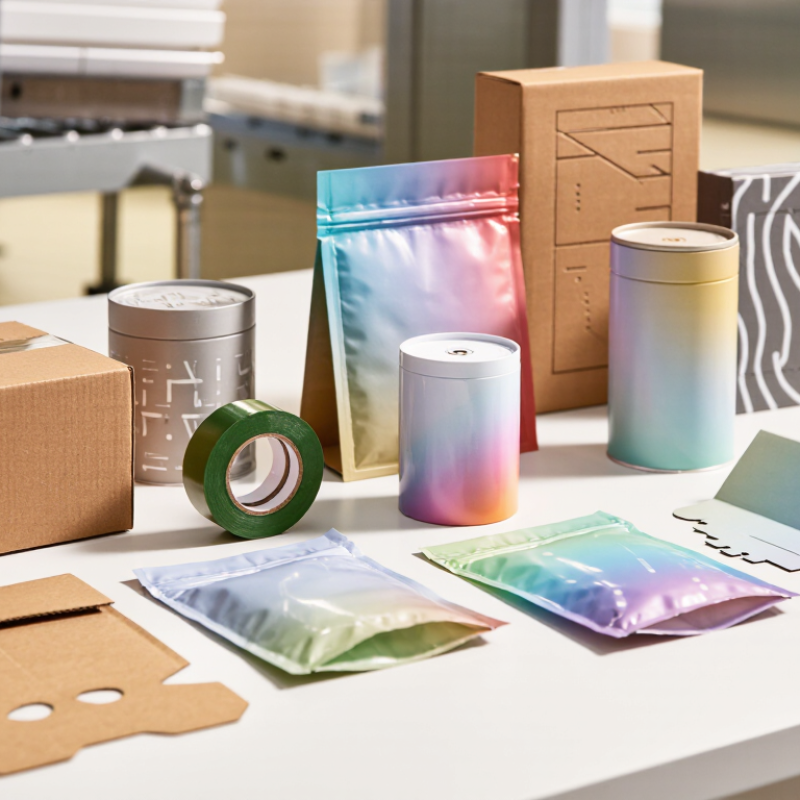
China’s packaging industry is moving beyond standard boxes, labels, and pouches. Personalization now connects product protection with brand recognition, customer experience, and measurable retail performance.

Smithers’ The Future of Global Packaging to 2028 estimates that worldwide packaging demand will approach US$1.2 trillion by 2028. E-commerce, premium products, and shorter production runs are supporting this expansion. Grand View Research also identifies digital printing as a fast-growing packaging technology, supported by variable data and economical customization. These trends explain why Chinese manufacturers increasingly offer small-batch printing, custom structures, recyclable substrates, and automated finishing.

This guide examines ten China-based manufacturers associated with personalized packaging. The evaluation considers printing quality, material selection, prototype speed, minimum order quantities, certification practices, export experience, and communication reliability. Details matter. A well-made sample should show clean edges, accurate color, stable seals, and readable variable information.

No ranking is flawless.

Public data often differs between suppliers, marketplaces, and independent reports. Company claims also require verification. Buyers should request current test reports, factory photographs, material specifications, and production samples before placing large orders. ISO 9001, FSC, and food-contact documentation may support credibility, but certificates should match the actual facility and product.

The manufacturers below are presented as practical candidates, not automatic choices. Their suitability depends on packaging format, target market, budget, delivery schedule, and regulatory requirements. That distinction is easy to overlook. A visually attractive package can still fail during transport or create unnecessary material waste. Careful comparison remains essential.
China Top 10 Personalized Packaging Manufacturers?

What Personalized Packaging Means in China’s Manufacturing Market

China Top 10 Personalized Packaging Manufacturers?

What Personalized Packaging Means in China’s Manufacturing Market

Personalized packaging in China now means flexible production, not only attractive artwork. Manufacturers adjust box dimensions, materials, printing, and finishing for smaller product batches. This shift follows China’s expanding online retail economy. The National Bureau of Statistics reported online retail sales above RMB 15 trillion in 2023. More parcels require clearer identification and better protection.

The China Packaging Federation reported that China’s packaging industry generated over RMB 1.9 trillion in 2023. This figure shows the sector’s scale, but it hides a major change. Buyers increasingly request short runs, variable data, and faster sampling. Smithers’ digital packaging research valued the global digital print packaging market at about US$22 billion in 2023. Digital printing helps Chinese factories reduce plate preparation and support customized orders.

Still, personalization is not automatically efficient. A detailed design may slow packing lines or increase material waste. I have seen sample projects fail because the printed box looked excellent but collapsed during humid storage. A reliable manufacturer should test compression, color consistency, barcode readability, and delivery performance. Sustainability also needs careful review. “Recyclable” claims can become vague when coatings, adhesives, and mixed materials are involved. The best sourcing decision balances appearance, production data, protection, and honest material documentation.
How to Evaluate China’s Top Personalized Packaging Manufacturers

Evaluating China’s top personalized packaging manufacturers requires more than comparing catalog photos and quoted prices.

Start with production evidence: request recent samples, material specifications, and photographs of finished orders. Inspect color consistency, fold accuracy, glue lines, and surface durability. A reliable factory explains its printing process, tolerance ranges, and quality checkpoints in plain language. Ask who handles artwork review and how approval changes are recorded. Small details matter.

Check whether the manufacturer can match your packaging requirements at realistic volumes. A capable supplier should offer a clear prototype stage, documented sampling fees, and a repeatable timeline. Request a pilot run before committing to a large order. Measure box dimensions, test opening strength, and store samples under ordinary conditions for several days. Packaging that looks excellent on day one may warp later. I have found that response speed is useful, but it does not prove manufacturing skill.

Reliability also depends on traceability and responsible operations. Confirm business registration, factory location, production capacity, inspection records, and export documentation through independent checks. Review material declarations and ensure inks, coatings, adhesives, and components meet destination-market requirements. Do not accept vague sustainability promises; request test reports or verifiable certifications. Communication can still fail across time zones. Put specifications, tolerances, payment terms, corrective actions, and delivery responsibilities in writing. A lower quote may hide weaker inspection or costly rework. No supplier review is perfect.

Top 10 Chinese Manufacturers by Packaging Type and Specialization

China’s packaging market rewards specialized production, not broad claims. The State Post Bureau reported 174.5 billion parcels in China during 2023. Smithers’ 2024 packaging outlook also forecasts continued global growth through 2028. These figures support a practical shortlist of ten Chinese manufacturers by packaging type: flexible film, folding cartons, rigid plastic containers, glass bottles, metal cans, corrugated cases, paper bags, cosmetic packaging, pharmaceutical packaging, and smart packaging with traceable codes.

The strongest suppliers usually combine tested materials, automated inspection, and export documentation. Flexible-packaging specialists focus on barrier films and heat sealing. Carton producers emphasize color accuracy and structural design. Glass and metal manufacturers compete through weight control and forming precision. Pharmaceutical specialists need clean production areas and validated processes. Smart-packaging suppliers add QR-based traceability, although data security still deserves more attention. My ranking would consider defect rates, audit records, delivery stability, and recycling performance, rather than factory size alone. That is a less glamorous method, but it is more useful.

Tips: Request recent test reports, production samples, and a factory video call. Check migration testing for food-contact materials. Compare minimum order quantities, tooling fees, and replacement policies. Do not trust impressive catalog images alone. A supplier may offer excellent printing but weak quality control. That distinction is easy to miss.

China Top 10 Personalized Packaging Manufacturers? - Top 10 Chinese Manufacturers by Packaging Type and Specialization

Rank Packaging Type Core Specialization Common Materials Typical Applications Personalization Options Indicative MOQ Typical Production Lead Time Common Compliance Requirements
1 Custom Folding Cartons Retail and gift-box packaging with efficient flat shipping Folding boxboard, coated paperboard, recycled paperboard Cosmetics, food, electronics, healthcare products Offset printing, foil stamping, embossing, die-cut windows, matte or gloss coating 1,000–5,000 pieces 10–25 working days after artwork approval Food-contact paper standards, FSC-certified materials when specified, applicable product-labeling rules
2 Rigid Gift Boxes Premium presentation and structural protection Greyboard, specialty paper, textile, leatherette, wood veneer Jewelry, premium food, spirits, cosmetics, corporate gifts Magnetic closures, ribbon pulls, inserts, foil details, debossing, custom compartments 500–2,000 pieces 20–40 working days after sample approval Material safety documentation, packaging-recycling requirements, food-contact compliance where applicable
3 Flexible Stand-Up Pouches Lightweight, resealable and high-barrier packaging PE, PET, BOPP, CPP, aluminum foil and laminated films Snacks, coffee, pet food, powders, personal-care products Digital or rotogravure printing, zippers, spouts, tear notches, clear windows, custom shapes 10,000–30,000 pieces 20–35 working days, depending on film structure and printing method Food-contact declarations, migration testing, barrier testing, recycling-label requirements
4 Paper Bags Branded retail and takeaway packaging Kraft paper, art paper, recycled paper, coated paper Retail stores, restaurants, bakeries, events and hospitality Custom handles, flexographic or offset printing, twisted-paper or cotton ropes, gussets and reinforced bases 3,000–10,000 pieces 15–30 working days after artwork approval Paper-origin documentation, food-contact suitability for direct-contact use, local recycling requirements
5 Corrugated Shipping Boxes E-commerce protection and transport efficiency Single-wall or double-wall corrugated board, kraft liner, recycled liner E-commerce, appliances, furniture, subscription boxes, industrial goods Flexographic or digital printing, inserts, partitions, tear strips, self-locking structures and custom sizes 500–2,000 pieces 7–20 working days for standard structures Packaging-strength testing, ISTA testing when required, recycled-content and transport requirements
6 Glass and Plastic Bottles Liquid containment with customized shapes and closures Glass, PET, HDPE, PP, aluminum closures and elastomer seals Beverages, cosmetics, essential oils, pharmaceuticals and household products Custom molds, screen printing, labeling, coating, color matching, pumps, droppers and caps 5,000–30,000 units; custom molds usually require higher volumes 25–60 working days, including mold development when applicable Food-contact or cosmetic-packaging safety, leak testing, drop testing, chemical compatibility and applicable recycling rules
7 Cosmetic and Skincare Packaging Decorative primary packaging and coordinated secondary packaging Glass, acrylic, PET, PP, ABS, aluminum and paperboard Creams, serums, lotions, makeup, fragrances and personal-care products Color matching, metallization, frosting, hot stamping, silk screening, pumps, jars, tubes and custom sets 3,000–10,000 units 25–50 working days, depending on decoration and component sourcing Cosmetic-packaging compatibility, restricted-substance controls, leak testing and relevant market labeling rules
8 Biodegradable and Compostable Packaging Fiber-based and bio-based alternatives to conventional packaging Molded fiber, bagasse, kraft paper, PLA and certified bio-based films Food service, produce, cosmetics, promotional products and e-commerce Custom molds, water-based coatings, embossing, printed graphics, die-cutting and fitted inserts 5,000–20,000 pieces 20–45 working days, depending on tooling and certification needs Compostability or biodegradability certification, food-contact testing, PFAS restrictions and disposal labeling
9 Labels and Flexible Sleeves High-volume product identification and decorative coverage Paper, BOPP, PET, PE, PVC alternatives, adhesives and liner materials Bottles, jars, cartons, logistics units, food and personal-care products Variable data, barcode printing, metallic effects, tactile varnish, clear labels, shrink sleeves and tamper-evident features 10,000–50,000 labels or sleeves 7–20 working days after artwork approval Ink and adhesive safety, barcode readability, food-contact requirements and recycling compatibility
10 Protective Inserts and Display Packaging Product cushioning, organization and point-of-sale presentation EPE foam, EVA, molded pulp, corrugated board, paperboard and thermoformed PET Electronics, tools, cosmetics, medical devices, gifts and fragile products Custom cavities, die-cutting, flocking, printed surfaces, dividers, trays and retail-display structures 500–5,000 pieces 15–35 working days after structural approval Drop and vibration testing, material safety documentation, dimensional inspection and packaging-waste requirements
Data note: MOQ and lead-time figures are indicative industry ranges for customized production in China. Actual requirements vary according to materials, dimensions, printing method, tooling, order quantity, testing, certification and destination-market regulations. No company names or brand-specific performance data are included.

Key Services, Materials, Technologies, and Customization Options

China’s top ten personalized packaging manufacturers typically support design, sampling, production, and quality inspection. Experienced teams begin with the product, audience, shipping route, and budget. These details shape a practical packaging solution.

Common services include structural design, artwork adjustment, prototype production, small-batch testing, and large-scale manufacturing. Materials may include recycled paperboard, corrugated cardboard, rigid board, glass, aluminum, and selected plastics.

Paper packaging suits retail boxes and mailers. Glass and aluminum offer stronger protection for cosmetics, food, and specialty goods. Material choices should consider product weight, moisture, temperature, and recycling requirements.

Modern factories often use digital printing, offset printing, flexographic printing, embossing, debossing, foil stamping, spot coating, and laser cutting. Some provide automated folding, gluing, and camera-based inspection. Customization can cover dimensions, compartments, inserts, handles, closures, textures, colors, and surface finishes.

A small sample helps reveal weak corners, loose inserts, or color differences before mass production. It is a simple step, but many buyers still skip it.

Sustainable options can include water-based inks, recycled fibers, reduced coatings, and right-sized structures. However, “eco-friendly” claims need evidence. Ask for material specifications, test reports, production photos, and clear tolerances. Costs may rise with complex finishes, but poor packaging can create higher replacement and return expenses.

How to Select the Right Personalized Packaging Manufacturer in China

Choosing among China’s top personalized packaging manufacturers requires more than comparing unit prices.

Smithers’ The Future of Packaging to 2028 estimates that the global packaging market will approach US$1.2 trillion by 2028. Competition is intense. Your supplier must still protect quality at smaller, customized volumes.

Request a complete sample before signing. Check color consistency, folding accuracy, material thickness, odor, and transit damage. Ask for the factory’s quality records, testing methods, production capacity, and corrective-action process. A reliable manufacturer should explain tolerances clearly, not promise “zero defects” without evidence. Confirm whether printing, lamination, assembly, and inspection occur in-house. Independent audits can reduce blind spots. My practical mistake was trusting attractive samples without testing packed products after shipping. The result was avoidable corner crushing.

Tips: Compare three written quotations. Separate tooling, sampling, printing, packing, and freight costs. Ask for a pilot order first. Use measurable approval standards, such as color difference, dimensions, and seal strength. Review the supplier’s export experience and documentation. PMMI’s 2024 packaging research continues to highlight automation, sustainability, and flexible production as major industry priorities. Therefore, ask how the factory reduces material waste and handles design changes. A cheaper quotation may become expensive after rework. Be willing to reject a good-looking sample.