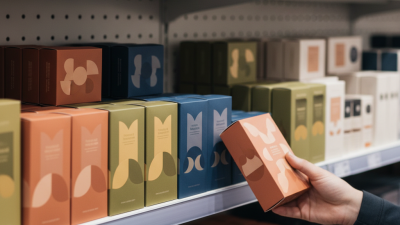
What Are the Top 10 Retail Ready Packaging Tips for Buyers?

Retail ready packaging is where a buyer’s shelf plan meets the realities of a busy stockroom. A case may look tidy in a presentation, yet arrive with crushed corners, hard-to-tear perforations, or labels hidden behind a flap. Small failures slow replenishment. They also make a product harder to shop. Buyers need to assess the full journey: shipping, opening, stocking, shelf display, and disposal.

Packaging researcher Dr. Susan Selke’s work highlights a useful buyer concern: packaging must protect products while making thoughtful use of materials. A practical line for this guide is: “The best retail ready packaging protects the product and makes the next step easy.” This is an editorial principle, not a direct quotation. It captures the balance buyers should test. Can a store associate open the case without a knife? Does the tray hold its shape when lifted? Can shoppers see the product clearly from the aisle? There is no perfect format for every product. A shallow tray might face well but offer less protection in transit. That trade-off deserves a real test, not a guess.

The tips ahead will help buyers compare designs, request useful samples, and check performance before approving a rollout. Look closely at board strength, print legibility, opening instructions, shelf footprint, and replenishment speed. Include store staff in trials when possible. Their feedback may expose a flaw that a polished mock-up misses. Retail ready packaging is not simply a display box. It is a working tool, and sometimes it needs another round of testing.

What Are the Top 10 Retail Ready Packaging Tips for Buyers?

Define Retail Ready Packaging Needs and Retailer Requirements

Retail-ready packaging should begin with the retailer’s actual requirements, not a design mockup. Confirm the product count, case dimensions, shelf depth, display orientation, and how the package opens. Ask whether staff need to place the tray directly on a shelf or remove a cover first. Small details matter. A tray that looks neat on a desk may block nearby products when placed on a crowded shelf.

Write down the requirements before choosing board strength, perforation style, or graphics. Check shipping conditions, stacking height, replenishment speed, and any retailer rules for labels or barcodes.

Then compare a physical sample with the shelf and test it by opening the case as store staff would. Can the front panel tear cleanly? Does the tray stay rigid after handling? These checks catch practical problems early.

It is tempting to treat one retailer’s specification as a universal standard. That assumption can fail. Requirements may differ by store format, product size, or delivery method, so confirm the current details with the buyer. Leave room for revision; a first sample rarely answers every question.

Plan Shelf Fit, Product Visibility, and Easy Store Replenishment

Retail-ready packaging succeeds when it fits the shelf without slowing store teams. Measure shelf width, depth, and usable height with the retailer’s actual planogram; a few millimeters can disrupt a full row. Keep the opening wide enough for shoppers to see the product, but strong enough to protect units during transport. The U.S. Census Bureau reported that e-commerce represented 16.1% of total retail sales in Q4 2024, meaning physical stores still account for most sales. Visibility matters. So does a carton that staff can open quickly.

Tips: Test a filled case on a real shelf, not only in a design file. Check whether the front panel faces shoppers after opening, and whether the case can be lifted without tearing. Add clear product and quantity information where staff can spot it. ECR Europe’s Shelf Ready Packaging guidance highlights replenishment efficiency and reduced handling as key design goals. Time store staff opening and stocking a sample; a neat prototype may still be awkward in a busy aisle.

Replenishment is part of the shopper experience. Use perforations that separate cleanly, avoid loose inserts, and make the remaining stock easy to count. Confirm that stacked cases stay stable in transit and leave labels readable after handling. One detail often gets missed: shelf-ready cartons may look efficient in a warehouse, yet block neighboring products when placed in a tight bay. Revise the design with store feedback, even when that means changing a preferred layout.

Top 10 Retail-Ready Packaging Tips for Buyers

Practical checklist prompts by topic: plan shelf fit, product visibility, and easy store replenishment.

Counts show the number of prompts in this guide for each topic; they are not survey results or market statistics.

Assess Package Strength, Sustainability, and Regulatory Compliance

Retail-ready packaging must survive pallet movement, shelf stocking, and repeated handling. Test filled cases with compression, vibration, and drop trials that reflect the actual distribution route. A neat shelf display means little if corner panels buckle. Check that perforations open cleanly without tearing labels or weakening the tray. Not always.

Sustainability choices need evidence, not green-sounding claims. The US EPA’s 2018 Advancing Sustainable Materials Management report counted 82.2 million tons of containers and packaging in municipal solid waste, or 28.1% of total generation. The figure is dated, but it shows why material reduction and recovery deserve scrutiny. Eurostat’s 2022 packaging-waste statistics reported 186.5 kilograms per EU resident. Compare local data before setting targets. Lightweighting can help, but a thinner pack that causes product damage may increase total waste.

Check requirements by market and product category before approving artwork. For food-contact packaging, verify material declarations, applicable migration-test records, and supplier traceability documents. Confirm labeling, recycling claims, and language requirements against current local rules; requirements differ and can change. Keep records. One blind spot is approving samples based on appearance alone. A small pilot run can reveal weak seals, messy openings, or shelf instability before a large order.

What Are the Top 10 Retail Ready Packaging Tips for Buyers? - Assess Package Strength, Sustainability, and Regulatory Compliance
# Buyer Tip What to Assess Practical Check Relevant Standard or Compliance Consideration
1 Test package strength for the actual distribution route Resistance to stacking, drops, vibration, compression, and handling damage. Consider product weight, pack configuration, and expected transport conditions. Run a documented test plan on production-representative packs. Set acceptance criteria for product damage, seal failure, and package deformation before testing; there is no single pass threshold suitable for every product. ASTM D642 addresses compressive resistance, and ASTM D5276 covers free-fall drop testing. Select methods and conditioning appropriate to the distribution system; ISTA procedures may also be relevant.
2 Confirm dimensions, case count, and shelf fit Outer-case dimensions, product orientation, pack count, pallet pattern, shelf depth, and clearance for loading and replenishment. Measure assembled packages from production samples, including normal manufacturing variation. Compare the measurements and case configuration with the retailer’s current written specifications. Retailer requirements are often specific to the store format and product category. Verify the final dimensions, case quantity, and pallet configuration with the receiving retailer.
3 Make the display easy to open and replenish Opening instructions, perforation quality, tear-strip performance, tray stability, product visibility, and whether the display remains intact after opening. Ask store staff or representative users to open, place, and replenish the package using the intended method. Check for tools, loose fragments, blocked product, and damage during opening. Agree on retailer-specific shelf-ready packaging requirements. Validate that the design works both as a transport case and as an in-store display.
4 Use materials efficiently without compromising protection Packaging weight and volume relative to the product, unnecessary layers, void space, and protection needed to prevent damage or food/product loss. Compare the proposed design with the existing pack using measured material mass per sale unit and distribution-test results. Document any material reduction and its effect on damage rates. ISO 18601 and related standards in the ISO 18602–18606 series provide a framework for packaging and the environment, including source reduction and material recovery considerations.
5 Substantiate environmental claims Evidence behind terms such as “recyclable,” “compostable,” “recycled content,” or “plastic-free,” including the exact package component covered by the claim. Keep supporting records for material composition, certifications where applicable, and disposal conditions. Check whether suitable collection and processing are available in the markets where the package will be sold. In the United States, environmental marketing claims are addressed by the FTC Green Guides (16 CFR Part 260). Claim requirements differ by jurisdiction; avoid broad or unqualified claims that the evidence does not support.
6 Check food-contact or other regulated-material requirements Intended use, material composition, coatings, adhesives, inks, and the conditions in which the package may contact the product. Obtain current supplier documentation for the exact material and intended use. Confirm that conditions such as temperature, contact duration, and food type are covered where relevant. For food-contact materials in the United States, applicable FDA requirements may include provisions in 21 CFR Parts 174–179. Requirements vary by material, use, and destination market.
7 Verify mandatory information and scannability Product identity, net quantity, responsible-party information, required warnings or instructions, lot/date coding, and barcode placement. Review the artwork against the rules for each destination market and product category. Test barcode readability on the finished package in its final position and under expected retail scanning conditions. Labeling rules vary by product and jurisdiction. In the United States, applicable packaged-food labeling requirements include 21 CFR Part 101; covered consumer commodities may also be subject to the Fair Packaging and Labeling Act and implementing rules.
8 Review producer-responsibility and disposal obligations Packaging materials and weights by component, recyclability or recovery route, reporting needs, and fees that may apply in each sales market. Maintain a component-level material and weight specification. Confirm current registration, reporting, labeling, and fee obligations with qualified local compliance resources before launch. Extended producer responsibility and packaging rules vary by country and, in some cases, by state or province. Confirm the rules and effective dates for every market served.
9 Control supplier consistency and change management Board grade or material specification, dimensions, print and color tolerances, adhesive performance, and approved substitutions. Use a written packaging specification and incoming-quality checks. Require review and approval before changes to materials, construction, artwork, or manufacturing location. Align inspection and change-control requirements with the purchase agreement and the retailer’s supplier standards. Keep current specifications and test records traceable by revision.
10 Run a pilot before full rollout Damage, opening and replenishment time, shelf appearance, scan performance, consumer access, and disposal or recycling feedback. Trial production-representative packs through the intended distribution and store process. Record results against pre-agreed acceptance criteria and revise the design where evidence shows a problem. Use documented results to confirm performance against retailer specifications, applicable regulations, and the package’s intended distribution conditions before scaling up.

Buyer note: Regulatory obligations, retailer specifications, and recycling access vary by product and market. Confirm current requirements with the relevant retailer and qualified compliance professionals before approving artwork or production.

Compare Supplier Capabilities, Lead Times, and Total Costs

Retail-ready packaging can save labor only when it fits your store and supplier’s production line. Ask suppliers for samples made with the actual board grade, dimensions, and print finish. Test whether store staff can open the case quickly and stock products without tools. Small detail, big impact. Check display stability on a shelf, not just on a clean conference table.

Compare supplier capabilities with a simple scorecard. Record print tolerances, color controls, quality checks, monthly capacity, and experience with your packaging format. Ask how they handle a rejected batch. Then compare quoted lead times, including artwork approval, sampling, production, and delivery. A six-week promise may exclude sample revisions. Request a schedule with milestones, and leave room for delays; my estimates have been too optimistic before.

Total cost goes beyond the unit price. Include setup charges, tooling, freight, storage, damage allowances, and the labor needed to assemble or replenish displays. For example, a cheaper flat-packed case may require extra store labor, while a pre-glued option may take more warehouse space. Compare costs at your expected order volume, then test a small run before committing. One estimate will still be imperfect. Track actual waste and handling time after the trial, and use those figures to revisit the supplier comparison.

Test Packaging Samples Before Approving a Full Order

What Are the Top 10 Retail Ready Packaging Tips for Buyers?
Test Packaging Samples Before Approving a Full Order

A sample can look perfect on a desk and fail on a busy store floor. Ask for production-equivalent samples, packed with the actual product, inserts, and case quantity. Open each case as a store employee would. Check whether the display forms quickly, stays upright, and exposes every item without scissors. Small details matter. Scan the barcode, too, and confirm it remains readable after handling.

Test filled cases for stacking strength, vibration, and drops using a relevant ISTA procedure. Then inspect closely. Record damaged units, setup time, and any crushed corners or loose dividers. The U.S. EPA’s 2018 Facts and Figures report counted 82.2 million tons of containers and packaging in municipal solid waste, or 28.1% of the total. That scale makes avoidable damage and rework worth taking seriously. A clean lab pass is not proof of store performance; real handling is messier. If the first sample fails, revise the structure and test again before approving the full order.